












Freshly Cooked vs. Raw Dog Food: Which Is Better?

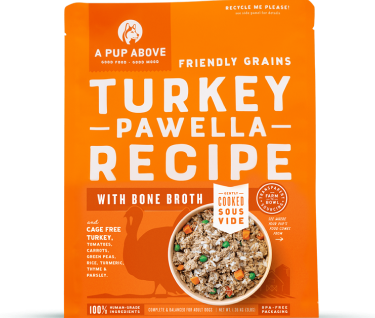
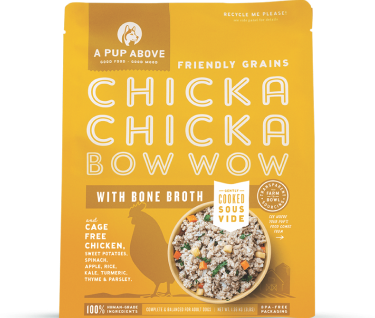
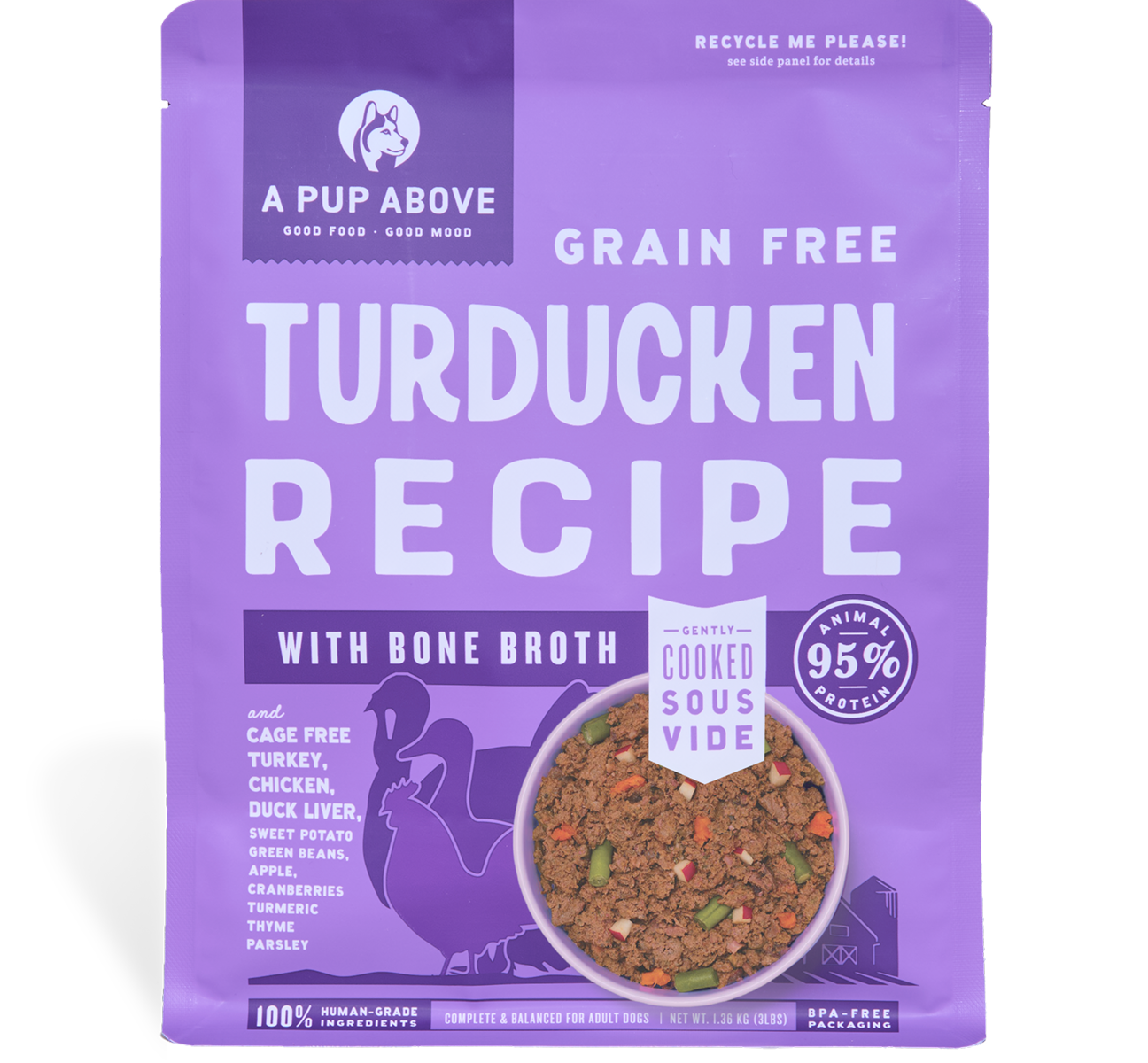
Freshly cooked and raw dog food are both whole-food, human-grade alternatives to kibble, and both can nourish a healthy dog well. The clearest difference between them is food safety: raw meat carries a measurably higher risk of pathogens like Salmonella and Listeria monocytogenes than cooked food does, which changes how much handling care it needs in your kitchen.1 2 Gently cooked food, like A Pup Above's sous-vide recipes, aims for the same whole-food nutrition as raw, with a cooking step built in specifically to reduce that risk.
If you're weighing raw against freshly cooked, you've likely already ruled out heavily processed kibble, well ahead of where most dog food conversations start. This is a closer call: both diets can be built around real meat and whole ingredients. Here's the honest, side-by-side version, including where raw has a genuine edge and where cooking changes the math.
Is Raw or Cooked Meat Better for Dogs?
Neither is inherently "better" in every sense; they're different tradeoffs built from similar ingredients. Advocates of raw diets point to benefits like shinier coats, healthier skin, and smaller stools.3 Gently cooked food is built from the same real meat, non-GMO vegetables, and real bone broth, but with one structural difference: the cooking process is a built-in pathogen-reduction step that raw doesn't have.1 2
That distinction matters most for households with young kids, older adults, a compromised immune system, or multiple pets, where cooking's built-in safety step carries more weight. Pet parents comfortable with raw-meat handling discipline can reasonably choose raw instead. Either way, both are a step up from kibble on ingredient quality; from there, it's about which tradeoffs fit your household.
How Do Freshly Cooked and Raw Dog Food Compare, Side by Side?
| A Pup Above Gently Cooked | Raw Dog Food | |
|---|---|---|
| Main ingredients | Real meat, non-GMO vegetables, real bone broth | Raw muscle meat, organ meat, ground bone; some recipes add raw egg or dairy |
| How it's prepared | Gently cooked, sous-vide | Not cooked; frozen or freeze-dried raw |
| Pathogen-reduction step | Yes, cooking is built in | No; relies entirely on handling |
| Pathogen testing (FDA study) | N/A; cooking targets pathogen reduction | 8% of samples positive for Salmonella, 16% for Listeria monocytogenes1 |
| Ingredient list | Human-grade, whole-food ingredients | Often whole-food too; quality and sourcing vary by brand |
| Moisture content | High | High |
| Where it's stored | Fridge or freezer | Freezer (thawed briefly before serving) |
| Handling requirements | Standard fridge-food hygiene | Dedicated surfaces, immediate cleanup, no sitting out1 2 |
| Nutritional completeness | Formulated to AAFCO complete-and-balanced standards4 | Can also meet AAFCO standards; unbalanced homemade raw is a common risk point3 |
| Good fit for | Households wanting whole-food nutrition with less kitchen-safety overhead, including homes with kids or immunocompromised members | Pet parents comfortable with raw-meat handling discipline and no vulnerable household members |
Is Raw Dog Food Safe? What the Pathogen Data Actually Shows
This is the one place raw and cooked genuinely diverge, and it's worth looking at plainly instead of guessing.
Cooking, A Pup Above's sous-vide process included, is among other things a pathogen-reduction step. Raw meat skips that step, so any bacteria naturally present in raw meat, poultry, or fish stays present in the bowl. In a two-year study, the FDA's Center for Veterinary Medicine tested 196 samples of commercially available raw dog and cat food and found 15 positive for Salmonella (about 8%) and 32 positive for Listeria monocytogenes (about 16%); none of the 120 dry dog food samples tested in the same study came back positive for either.1
"Quite a large percentage of the raw foods for pets we tested were positive for the pathogen Listeria monocytogenes." Dr. Renate Reimschuessel, veterinarian, FDA Center for Veterinary Medicine1
The American Veterinary Medical Association's policy on the subject is direct: it discourages feeding cats and dogs "any animal-source protein that has not first been subjected to a process to eliminate pathogens, because of the risk of illness to cats and dogs, as well as humans."2 That risk runs both ways: to the pet eating raw food, and to the kids, older adults, or immunocompromised people handling it.
None of this makes raw food reckless, only more demanding in the kitchen. The safe-handling routine looks like handling raw chicken for your own dinner: thaw it in the fridge, not on the counter, use a dedicated cutting board and bowl, wash hands and surfaces thoroughly, and don't let food sit out. Gently cooked food carries the same everyday fridge-food basics, just without that added pathogen layer to manage.
Is Freshly Cooked or Raw Food More Digestible for Dogs?
There isn't strong independent research proving raw is more digestible than cooked, or the reverse; most comparative research looks at whole-food diets, raw or cooked, against heavily processed kibble, not raw against cooked head-to-head. What that research does show clearly is that whole-food diets, in either form, tend to digest better than extruded kibble.
For A Pup Above specifically, we can point to third-party substantiation: independent testing puts our gently cooked recipes at 93%+ digestible, against published kibble digestibility as low as 64%.5 That gap is where the comparison comes from: A Pup Above fresh food is up to 50% more digestible than standard kibble.5 Digestibility is one reason this comparison comes up a lot for owners managing a sensitive stomach. For more, see our guide to highly digestible dog food, or what to feed a dog with an upset or sensitive stomach if that's the more immediate question.
Nutritional completeness is a separate question from digestibility, and it applies equally to both formats. To claim "complete and balanced" on the label, a dog food, raw or cooked, has to meet one of AAFCO's nutrient profiles or pass an AAFCO feeding trial.4 That's the standard worth checking for, regardless of which format you choose.
Does Cooking Remove Nutrients From Dog Food?
Some, potentially, depending on the method. Heat-sensitive nutrients can break down during cooking, and water-soluble vitamins can leach into cooking liquid that gets poured out, which is a fair concern when weighing a cooked food's nutrient profile against raw's.
It's also exactly the problem sous-vide cooking is built to avoid. A Pup Above's recipes are simmered inside sealed, food-safe bags, so the nutrient-rich liquid stays with the meat instead of draining away. That's also where our real bone broth comes from: the collagen-rich gravy left behind after slow, low-temperature cooking, not a separate ingredient added back in. The result is whole-food nutrition without the losses that concern people about faster, higher-heat cooking methods. For more on how the process works, see our food.
So Which One Should You Choose?
Both diets can nourish a healthy dog well, so the honest answer depends on your household, not on which food is "healthier" in the abstract. Raw keeps ingredients in their least-processed state and works well for pet parents with a solid handling routine and no vulnerable household members. Gently cooked keeps the same real-meat, whole-food ingredients but builds pathogen reduction into the process itself, which is why it tends to be the lower-maintenance choice for homes with kids, older adults, multiple pets, or anyone immunocompromised, and it's often an easier sell for picky eaters, since cooking is part of what makes food smell appealing in the first place.
Can You Switch Between Raw and Gently Cooked Food?
Yes, and it's a common move in both directions: some dogs move from kibble to raw and later shift to gently cooked for the lighter handling load; others start with gently cooked and never look elsewhere. Either way, treat it like any diet change.
Go slowly. Most dogs do best with a transition over about a week, gradually increasing the new food and decreasing the old one every couple of days. Dogs with sensitive stomachs often do better closer to two or three weeks. See our full transition guide for a day-by-day schedule.
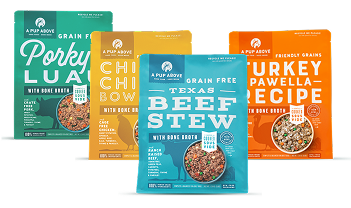
If you're not sure which recipe to start with, the sampler pack is a low-commitment way to see how your dog responds before committing to a full bag. The full fresh dog food lineup covers seven recipes, or browse the whole fresh food collection to compare them side by side.
Frequently Asked Questions
Is raw or cooked meat better for dogs? Both can nourish a healthy dog well when they're complete and balanced. Cooking is a built-in pathogen-reduction step raw doesn't have; beyond that, it comes down to your household's handling comfort and whether anyone in it is especially vulnerable to foodborne illness.
Is raw dog food safe to feed? It can be, with careful handling, but the risk is real: FDA testing of commercial raw pet food found Salmonella in about 8% of samples and Listeria monocytogenes in about 16%, versus zero in the dry dog food tested alongside it.1 The AVMA discourages feeding any animal protein that hasn't gone through a pathogen-reduction process for this reason.2
Is gently cooked food as nutritious as raw? Yes, when it meets AAFCO's complete-and-balanced standards, which apply the same nutrient minimums to raw and cooked food alike.4 A Pup Above's sous-vide method cooks meat inside sealed, food-safe bags to hold onto nutrients and moisture that cooking can otherwise lose.
Does cooking destroy nutrients in dog food? Some loss is possible with any cooking method, especially heat-sensitive vitamins in liquid that gets poured out. Sous-vide avoids that: meat and vegetables cook inside a sealed bag, so the nutrient-rich liquid stays in the food instead of going down the drain.
Can I switch my dog from raw to gently cooked food, or mix the two? Yes. Most dogs do fine with a gradual transition over about a week, similar to any other diet change. See our transition guide for a day-by-day schedule if your dog has a sensitive stomach or you'd rather go slower.
Why does A Pup Above cook its food instead of serving it raw? Every recipe is built around real meat, non-GMO vegetables, and real bone broth, then gently cooked sous-vide for the same whole-food nutrition with less pathogen risk, the same logic as cooking chicken for your own dinner. The ingredients don't change, just whether heat is part of the process.
Sources
- "Get the Facts! Raw Pet Food Diets can be Dangerous to You and Your Pet," U.S. Food and Drug Administration: https://www.fda.gov/animal-veterinary/animal-health-literacy/get-facts-raw-pet-food-diets-can-be-dangerous-you-and-your-pet ↩
- "Raw or Undercooked Animal-Source Protein in Cat and Dog Diets," American Veterinary Medical Association: https://www.avma.org/resources-tools/avma-policies/raw-or-undercooked-animal-source-protein-cat-and-dog-diets ↩
- "Fresh vs Raw Dog Food vs Kibble: Which Diet Is Best For Your Dog?," American Kennel Club: https://www.akc.org/expert-advice/nutrition/fresh-raw-kibble-dog-food/ ↩
- "'Complete and Balanced' Pet Food," U.S. Food and Drug Administration: https://www.fda.gov/animal-veterinary/animal-health-literacy/complete-and-balanced-pet-food ↩
- Gross, K.L., et al., "Nutritional Requirements and Related Diseases," in Small Animal Clinical Nutrition, 5th ed., Mark Morris Institute, 2020. ↩