












Soft Dry Dog Food: What It Is, and How Fresh Food Compares

"Soft dry dog food" almost always means semi-moist kibble: a shelf-stable dry-food category made soft with extra moisture and added humectants like glycerin or corn syrup, not baked or extruded to the same hard, crunchy finish as standard kibble. It's a different thing from fresh, gently cooked food, which is naturally soft because it's whole food that was never dried out in the first place. Both exist so you have a real texture to choose from; which one fits depends on why you're looking for "soft" in the first place.
If you landed here because your dog won't touch hard kibble, has trouble chewing, or you're just trying to figure out what "soft-dry" even means on a bag, here's the short version, and then the detail.
What Is Soft-Dry (Semi-Moist) Dog Food?
Semi-moist, or "soft-dry," dog food is a category of shelf-stable dry food. It still ships in a bag and sits in the pantry at room temperature, unlike wet or fresh food, but it's manufactured with more moisture and with humectants (ingredients that hold onto water) mixed in so the finished pieces stay pliable instead of hardening into a crunchy kibble. That's the entire distinction: more moisture and different additives, packaged and stored the same way as regular dry food.
It isn't a single recipe or a single brand's product, and it isn't automatically "healthier" or "gentler" than any other dry food just because it's soft. Some semi-moist products lean on added sugars or syrups to stay soft and palatable, which is worth knowing if you're comparing options on the label rather than by texture alone. As with any packaged food, the guaranteed analysis and ingredient list, not the word "soft" on the front of the bag, tell you what you're actually feeding.
Why Do Dogs Like a Softer Texture, and Why Do Owners Reach for It?
The appeal is straightforward. Softer, more aromatic food is often easier for a picky eater to get excited about than a dry, low-moisture kibble, and it's easier to chew for a dog with fewer teeth, sore gums, or a jaw that just isn't up to hard crunching anymore. Picky eating is, by a wide margin, the single most common reason A Pup Above customers say they went looking for a different kind of food: it shows up in 281 of 1,212 approved customer reviews, roughly 23%, more than three times any other topic in the corpus.1 Texture and aroma are a large part of why.
That's true whether the softer option is semi-moist kibble or fresh, gently cooked food. Both solve the same basic problem (a dog that finds dry, low-moisture kibble unappealing or hard to eat) with different tradeoffs, covered below.
Does a Softer Food Actually Help a Dog's Teeth?
Texture alone is a weaker lever here than it sounds. The idea that hard kibble scrapes teeth clean while soft food is "gentler on the gums but still helps" is a common assumption, but veterinary dentistry doesn't back the second half of it. Periodontal disease is extremely common in dogs: over 80% of dogs over the age of three have active dental disease, according to the veterinary dentists at VCA Animal Hospitals.2 Chewing action from any texture removes some plaque, but neither ordinary hard kibble nor semi-moist soft kibble is formulated or tested to control it. The Veterinary Oral Health Council (VOHC) maintains the actual bar for that claim: its seal only goes on products independently shown to reduce plaque or tartar buildup, and only a specific list of diets, chews, and treats currently carry it.3
In practice, that means texture is a food-preference and comfort decision, not a dental-care plan on its own. A dog with dental pain or missing teeth may genuinely do better on a softer food day to day, but daily brushing and, where needed, a VOHC-accepted product or a professional cleaning are what actually move the needle on plaque and tartar.2ˏ3
Soft-Dry Kibble vs. Fresh, Gently Cooked Food: How They Actually Compare
Both are legitimate ways to feed a dog a softer texture. Here's how they differ on the attributes that actually matter, so you can weigh the tradeoff instead of guessing from the word "soft" on the label.
| Semi-moist ("soft-dry") kibble | Fresh, gently cooked food | |
|---|---|---|
| Why it's soft | Extra moisture plus added humectants (e.g., glycerin, corn syrup) mixed into the formula | It's whole food, never dried out or extruded, so it starts soft |
| Processing | Baked or extruded like other dry food, formulated for a softer finish | Cooked gently, sous-vide at lower temperatures, no extrusion |
| Ingredient standard | Varies by brand; check the label, not the texture | A Pup Above's recipes use human-grade ingredients, meaning every ingredient and the finished product meet the standard for human consumption4 |
| Storage | Shelf-stable at room temperature | Refrigerated or frozen |
| Shelf life once opened | Long, similar to other dry food | Shorter; meant to be used within days, like any real food |
| Convenience | No fridge or freezer space needed | Needs fridge or freezer space and a bit more planning |
| Cost per feeding | Generally the least expensive soft option | Costs more than shelf-stable kibble for the same calories |
Neither column is "the" right answer. A semi-moist food that a picky eater will actually finish, and that fits a tight budget or a small kitchen, is a genuinely good outcome. So is switching to fresh food for a dog whose real issue is ingredient quality, digestibility, or a sensitive stomach, not just texture.
When Does Soft-Dry Kibble Make Sense, and When Does Fresh Make More Sense?
A few honest signals for each:
Soft-dry (semi-moist) kibble tends to fit when:
- Your dog already does fine on dry food and just needs an easier-to-chew version of it (a senior dog, a small-jawed breed, or a dog recovering from a dental procedure).
- Room-temperature storage and a longer open shelf life matter more than ingredient sourcing.
- Budget is the deciding factor and your dog's only real complaint is texture, not the food itself.
Fresh, gently cooked food tends to fit when:
- The problem isn't just texture. It's that your dog turns up its nose at kibble altogether, has a sensitive stomach, or you want to actually recognize what's in the bowl.
- You want a human-grade ingredient standard rather than checking a label for what's holding the kibble together.
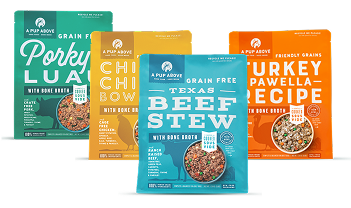
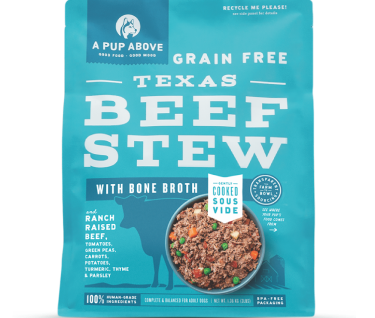
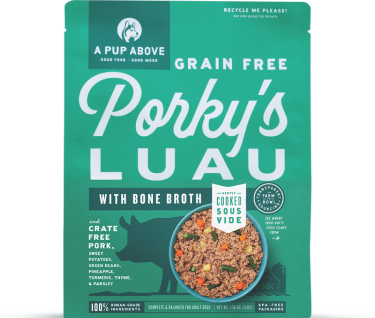
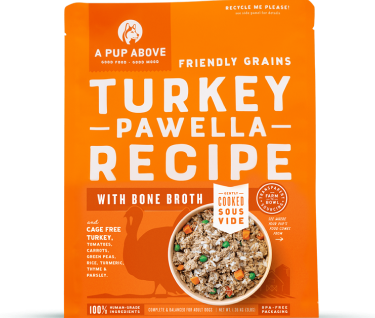
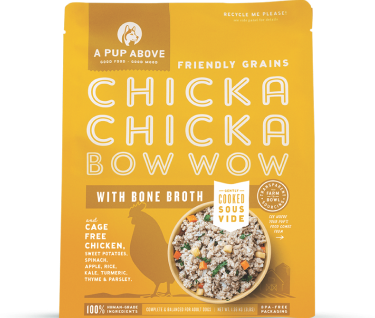
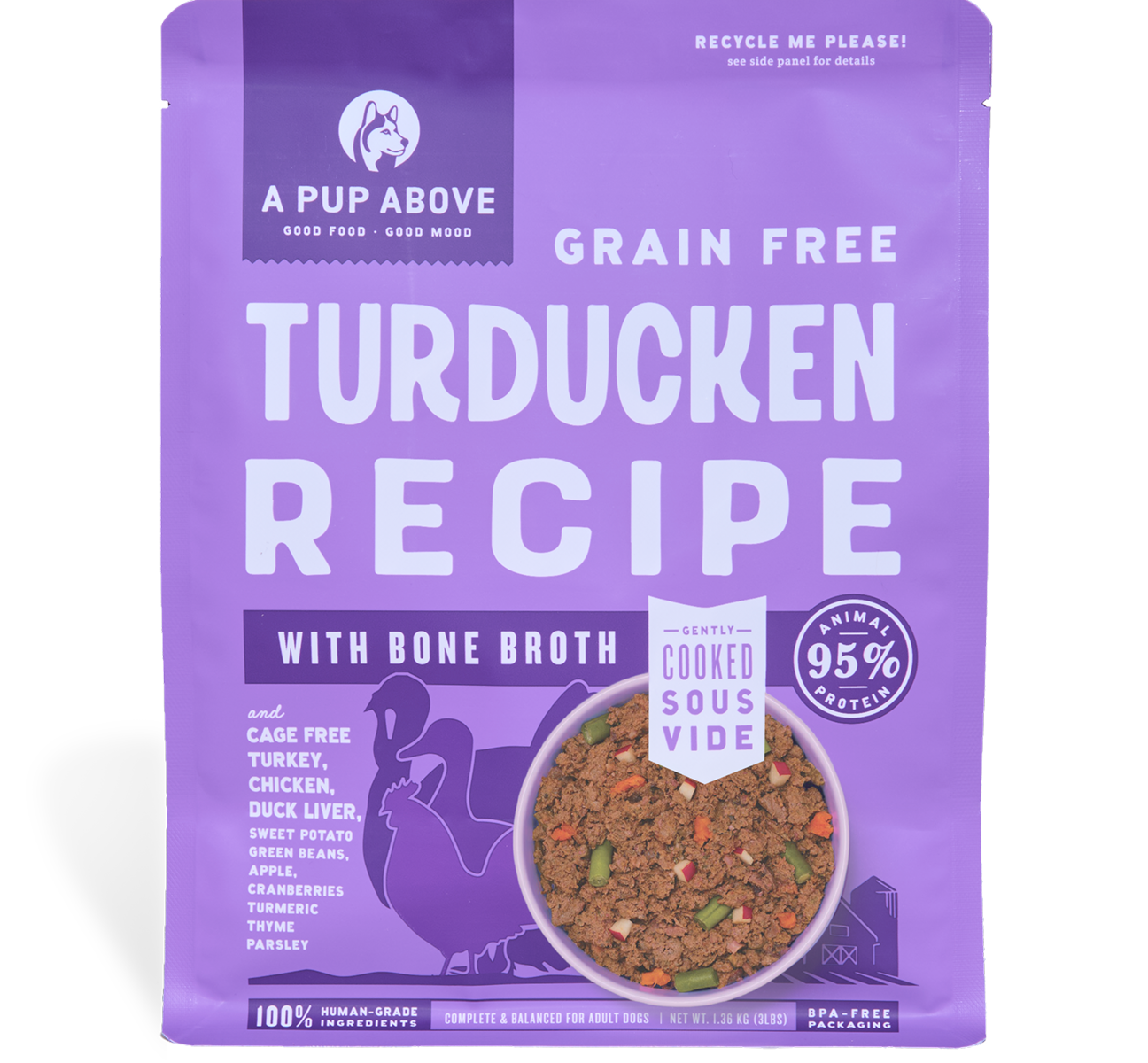
- You're open to fridge or freezer storage in exchange for a different starting point on ingredients and digestibility. A Pup Above's recipes are gently cooked sous-vide, made with human-grade ingredients and real bone broth, and are up to 50% more digestible than standard kibble.5
If your dog's main issue is age-related, see our guide to soft food for senior dogs for signs it's time to switch and how to do it safely. If you want the fuller processing and ingredient breakdown between fresh food and standard kibble, see fresh dog food vs. kibble. And if a sensitive stomach, not just texture, is the actual concern, start with the sensitive stomach collection rather than choosing on softness alone. You can see A Pup Above's own gently cooked recipes on the fresh dog food page.
Frequently Asked Questions
Is soft-dry dog food the same as wet or canned dog food? No. Wet and canned food is high-moisture and requires refrigeration once opened, similar to fresh food in that respect. Soft-dry (semi-moist) food is still a dry-food category: it's shelf-stable at room temperature, just formulated to stay softer than standard kibble.
Is semi-moist (soft-dry) dog food bad for a dog? Not inherently, but it isn't automatically the "healthiest" option just because it's soft either. Some semi-moist products rely on added sugars or syrups as humectants to keep the texture soft. If that matters to you, check the guaranteed analysis and ingredient list on the specific bag rather than assuming softness tells you anything about quality.
Does soft food help with a dog's dental health more than hard kibble does? Not reliably on its own. Chewing removes some plaque regardless of texture, but neither standard hard kibble nor semi-moist soft kibble is automatically formulated to control plaque or tartar. Only products carrying the Veterinary Oral Health Council's seal have been shown to do that, and daily brushing remains the most effective thing you can do.2ˏ3
Can I just add water to regular dry kibble instead of buying a soft-dry product? Yes. Adding warm water to hard kibble softens it in a few minutes and is a common, low-cost way to make an existing food easier to chew, though it won't change the ingredients or moisture level in the finished, packaged sense that a semi-moist product has.
What makes fresh, gently cooked food naturally soft, if it isn't semi-moist kibble? It's never extruded or dried in the first place. A Pup Above's recipes are cooked gently, sous-vide, using human-grade ingredients and real bone broth, so the texture stays close to what real food naturally is, without needing added humectants to soften it back up.4
How do I switch a picky eater over to a new soft food without an upset stomach? Slowly, over about a week, mixing in more of the new food and less of the old one each day. Our transition guide walks through the exact schedule and what to do if your dog's stool gets loose partway through.
Sources
- A Pup Above verified customer review data via Okendo, pulled August 13, 2026: 1,212 approved reviews; picky eating appears in 281 of 1,212 (23%). ↩
- "Dental Disease in Dogs," VCA Animal Hospitals, reviewed by Courtney Barnes, BSc, DVM; Lorraine Hiscox, DVM, FAVD, Dipl. AVDC; Jan Bellows, DVM, Dipl. AVDC, ABVP: https://vcahospitals.com/know-your-pet/dental-disease-in-dogs ↩
- "VOHC Accepted Products," Veterinary Oral Health Council: https://vohc.org/accepted-products/ ↩
- "AAFCO Standard for 'Human Grade' Pet Food," Association of American Feed Control Officials: https://www.aafco.org/wp-content/uploads/2023/01/AAFCO_Human_Grade_Standards_AMS.pdf ↩
- Third-party studies put A Pup Above meals at 93%+ digestible; published kibble digestibility can be as low as 64% (Gross, K.L. et al., in Small Animal Clinical Nutrition, 5th ed., Mark Morris Institute, 2020). ↩