












How to Switch Your Dog to Fresh Food (A 7-10 Day Transition Guide)
To switch your dog to A Pup Above fresh food, replace a growing share of their current food with fresh food over 7 to 10 days, following the ratio schedule below rather than swapping bowls overnight. Most dogs adjust well within the first week: in A Pup Above's most recent verified customer reviews, 37 of 47 respondents (79%) rated their transition as easy, and just as many said their dog ate the new food right away.5 Go slower, closer to 10 days, for puppies, seniors, sensitive stomachs, or dogs who have only ever eaten kibble.
Why transition to fresh food gradually?
A dog's gut adjusts to whatever it eats regularly. Change foods overnight and there often isn't enough time for that adjustment, which can show up as loose stool, gas, or a skipped meal, not because fresh food disagrees with your dog, but because any sudden diet change (fresh, raw, or a different kibble) can do that.
"Whenever possible, take at least a week to switch your dog to a new diet." Jennifer Coates, DVM, writing for PetMD1
That guidance is echoed across veterinary and canine-nutrition sources: the American Kennel Club's own transition guidance recommends increasing the new food in stages over about a week, tracking appetite, stool, and energy as you go.2 A Pup Above's recipes are gently cooked sous-vide using human-grade ingredients and real bone broth, and A Pup Above fresh food is up to 50% more digestible than standard kibble.4 That doesn't skip the adjustment period, guts still need time to shift to anything new, but it's part of why most transitions on the schedule below go smoothly.
How long does it take to transition a dog to fresh food?
Most dogs are fully transitioned in about 7 days. Give it closer to 10 if your dog:
- Has a sensitive stomach or a diagnosed digestive condition
- Is a senior dog
- Has eaten only kibble their whole life
- Is a notoriously picky eater
There's no prize for rushing it. A slower transition with zero symptoms beats a fast one that sets your dog's stomach back to day one.
What is the day-by-day transition schedule?
Mix the fresh food thoroughly into your dog's current food at each meal rather than spooning it on top, or a picky dog will eat around it. Use the standard pace for most dogs, or the slower pace for puppies, seniors, sensitive stomachs, and lifelong kibble eaters.
| Stage | Current food | A Pup Above fresh food | Standard pace | Slower pace |
|---|---|---|---|---|
| 1 | 75% | 25% | Days 1-2 | Days 1-3 |
| 2 | 50% | 50% | Days 3-4 | Days 4-6 |
| 3 | 25% | 75% | Days 5-6 | Days 7-9 |
| 4 | 0% | 100% | Day 7 onward | Day 10 onward |
Once your dog is fully transitioned, switch to the daily feeding amount for their weight. See how much you should feed your dog for the full chart by weight, since fresh food is measured differently than a kibble scoop.
What if my dog won't eat the new food?
This is the single most common question we hear, and picky eating shows up more than any other topic in A Pup Above's customer reviews.5 A few things usually help:
- Mix it in, don't top it. A dog that can sort new food out of old food will, so stir it through rather than layering it on top.
- Warm it slightly. A Pup Above fresh food can be served straight from the fridge, or with a splash of warm water stirred in if your dog responds better to food closer to body temperature.
- Skip the free feeding. Offer the meal for 15-20 minutes, then pick up the bowl. Grazing on it all day makes any food, old or new, less interesting.
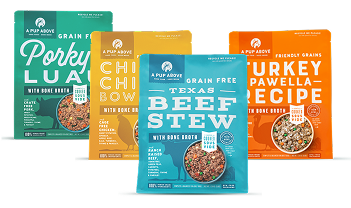
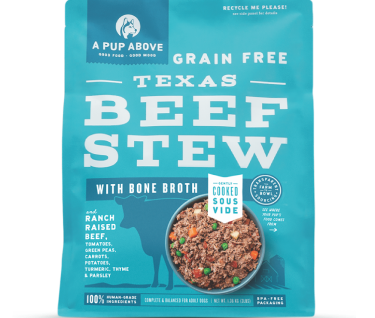
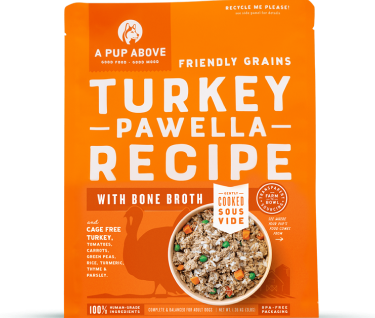
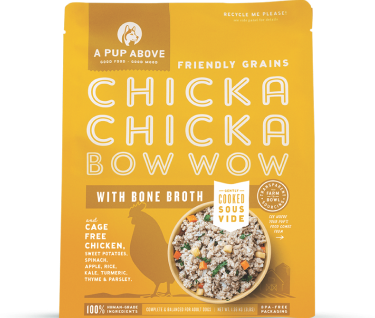
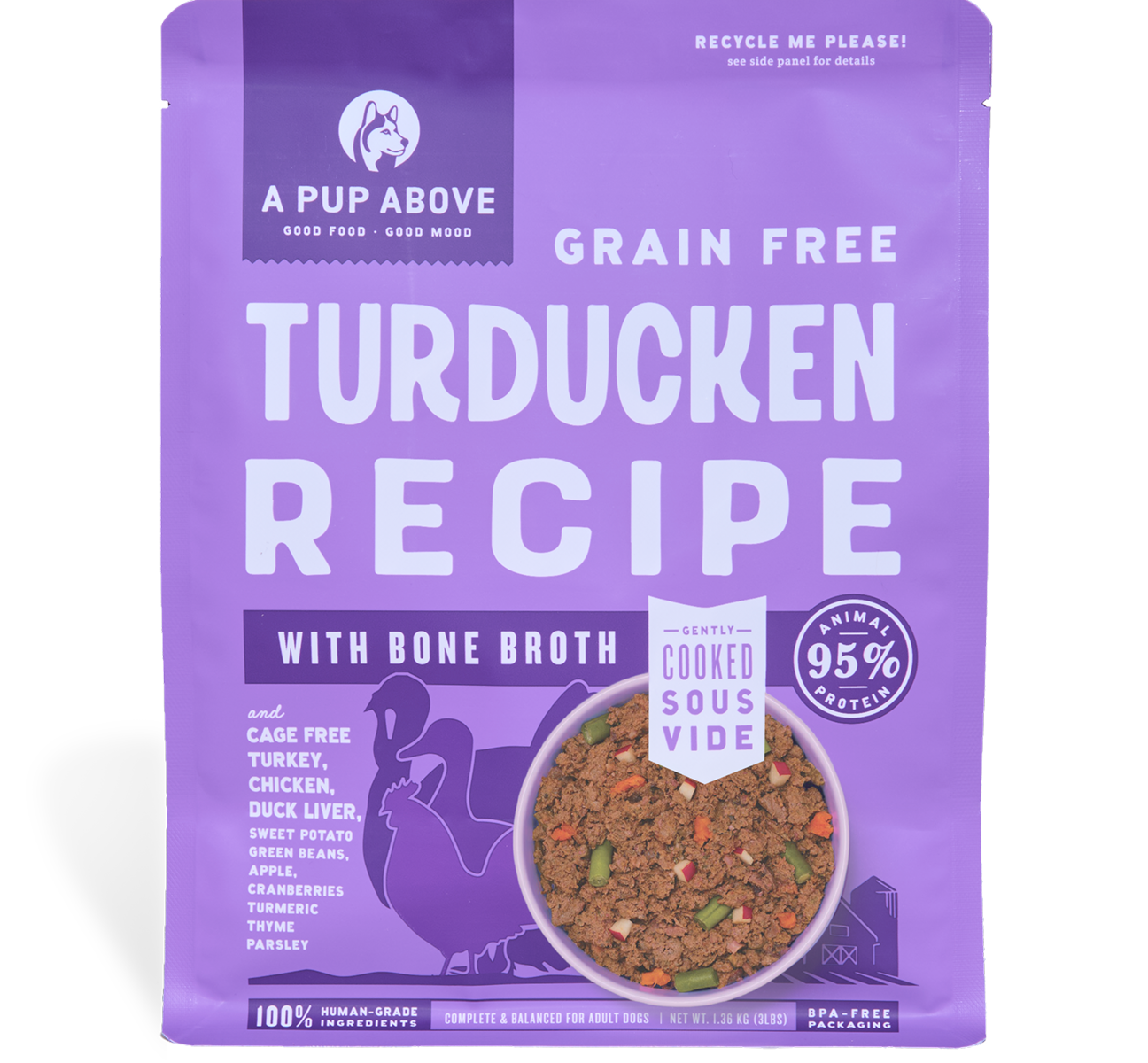
- Try a different recipe. A Pup Above comes in seven recipes, from Texas Beef Stew to Fish Gone Wild, and one protein or texture sometimes lands better than another with a particular dog.
- Hold a ratio for a few extra days. If a dog stalls at 50/50, staying there for 2-3 more days before pushing forward is often all it takes.
If your dog goes without eating entirely, or seems sick or lethargic, check in with your veterinarian rather than waiting it out.3
First orders are also covered by A Pup Above's 100% Tail Wags Guarantee: if a recipe isn't working out, reach out and the team will help you find one that does. For a deeper dive on picky eaters specifically, see what actually works for picky dogs.
What if my dog has loose stool, gas, or vomiting during the transition?
Mild digestive noise in the first few days is common with any diet change, not specific to fresh food, and it usually settles once the ratio stabilizes. Use this as a rough guide:
| What you're seeing | Usually normal | Check in with your vet if |
|---|---|---|
| Softer stool for a day or two | Yes, especially right after moving to a new ratio | Diarrhea doesn't improve after a few days, or you see blood |
| Mild gas | Yes | Persistent bloating or a hard, distended belly |
| Sniffing or eating slowly at first | Yes, especially the first meal or two | Your dog stops eating entirely |
| Vomiting once | Sometimes, especially with a fast transition | Vomiting repeats, or comes with lethargy |
That right-hand column is a reasonable time to call your vet rather than push through on your own.3 If you land there, slow down or pause at the last ratio your dog handled well, and don't be afraid to stretch a stage from 2 days to 4 or 5.
Can I use fresh food as a topper instead of fully switching?
Yes. Plenty of pet parents start here rather than replacing a meal outright: spoon a small amount of A Pup Above fresh food over your dog's current food as a topper, without following the full ratio schedule. It's a lower-commitment way to introduce real food, and it's also where the sampler pack comes in handy, since it lets you try a few recipes in smaller portions before settling on favorites. If you decide to fully transition later, pick up the schedule above from wherever your dog's topper ratio already sits.
How do I store and thaw fresh food during the transition?
A Pup Above ships frozen with dry ice to keep it cold in transit. Each bag holds individually sealed one-pound patties, so you can thaw only what a given stage of the schedule calls for instead of defrosting the whole bag at once.
- Unopened, individually sealed patties keep for up to 14 days in the fridge.
- Once thawed and opened, fresh food keeps for 5-7 days in the fridge.
- If you need to refreeze a patty, do it quickly after thawing and keep it cold in the meantime.
Since the exact amount you need shifts every couple of days during the transition, thaw slightly more than the ratio calls for and keep the extra refrigerated rather than refreezing it.
What about puppies, seniors, and sensitive stomachs?
- Puppies generally take to new food well, and A Pup Above's Puppy Recipe is formulated for growth, but use the slower pace above rather than the standard one.
- Senior dogs can be more sensitive to any diet change. The slower pace, plus keeping an eye on stool and energy, is the safer default.
- Sensitive stomachs do best at the slowest end of the schedule, sometimes even slower than 10 days. A Pup Above's Sensitive Stomach collection is built for dogs who need extra care during any transition.
Once your dog has fully transitioned, you can rotate between A Pup Above recipes freely, plenty of pet parents do it for variety. When introducing a new recipe for the first time, it's worth using the same gradual approach as the original switch.
Frequently Asked Questions
Do I need to talk to my vet before switching my dog to fresh food? Not usually, for a healthy adult dog. It's worth a quick call first if your dog has a diagnosed health condition, is on a prescription diet, or is a very young puppy or senior.
What happens if I switch too fast? Usually nothing serious, just a higher chance of loose stool or gas while your dog's gut catches up. If that happens, drop back to the last ratio that worked and hold it a few extra days before moving on.
Can I just mix fresh food in with kibble long-term instead of fully transitioning? Yes. That's topper mode, and it doesn't require following the ratio schedule, since you're not aiming for 100% fresh food.
My dog was eating the new food fine and then suddenly stopped. What happened? Often it's the novelty wearing off, or the current ratio needs a few more days to settle. Try mixing it in more thoroughly, warming it slightly, or holding the ratio longer before moving to the next stage.
Can I rotate between A Pup Above recipes once my dog is transitioned? Yes, it's encouraged. A rotational diet is a normal way to add variety. Use the same gradual approach the first time you introduce a new recipe.
What if my dog still won't eat it after a full week of trying? Reach out to the A Pup Above team. First orders are covered by the 100% Tail Wags Guarantee, and picky eating is the most common thing pet parents deal with when starting fresh food, so there's usually a fix (a different recipe, a warmer serve, a slower ratio) before it's time to give up.
Ready to start? Shop all seven recipes on the Fresh Dog Food page, or browse the full Fresh Food collection.
Sources
- "How to Switch Your Dog's Food," Jennifer Coates, DVM, PetMD: https://www.petmd.com/dog/nutrition/how-to-switch-your-dogs-food ↩
- "How to Switch Dog Foods: Transitioning Your Dog's Diet," American Kennel Club: https://www.akc.org/expert-advice/nutrition/right-way-switch-dog-foods/ ↩
- "How to Safely Change Your Puppy's Diet and Food," Jan Reisen, American Kennel Club: https://www.akc.org/expert-advice/health/safely-change-puppys-food/ ↩
- Third-party studies put A Pup Above meals at 93%+ digestible, against published kibble digestibility as low as 64%: Gross, K.L., et al., Small Animal Clinical Nutrition, 5th ed., Mark Morris Institute, 2020. ↩
- A Pup Above verified customer review data (Okendo), reviews pulled August 13, 2026: n=1,212 approved reviews (picky eating is the most-mentioned review theme, 281 of 1,212, 23%); structured-attribute subset n=47 recent reviews for the "transition rated easy" and "ate right away" figures (37 of 47 each). ↩