













Feeding a Dog by Life Stage and Size: The Complete Guide

A puppy, an adult dog, a senior, a pregnant or nursing dog, and a 6-pound dog next to a 60-pound dog all need meaningfully different things from a bowl of food, in calories, nutrients, and meal frequency alike. Dog food itself is only formulated against three official life-stage categories (growth, adult maintenance, and all life stages), and breed size changes the math again within any of them. Find your dog's situation below and go straight to the full guide built for it.
What Are the Official Life Stages for Dog Food?
The Association of American Feed Control Officials (AAFCO) sets the nutrient standards U.S. pet food is formulated or tested against, and it recognizes only three life-stage categories: growth (puppies, and pregnant or nursing dogs), adult maintenance (healthy adult dogs), and all life stages (formulated to meet the higher growth-stage minimums, so it covers every stage at once). Every complete and balanced food carries a nutritional adequacy statement, usually in small print near the ingredients or feeding directions, naming which of the three it meets.
That single line matters more than most of what's on the front of the bag. A food built only for adult maintenance is missing some of what a growing, pregnant, or nursing dog needs in higher amounts, including protein, calcium, phosphorus, and calories per pound. As the Canadian Academy of Veterinary Nutrition puts it in guidance published by VCA Animal Hospitals:
"A nutrient profile is a specific combination of protein, carbohydrate, fat, vitamins, and minerals. Nutrient profiles are designed by pet food manufacturers to market their products for the different stages of a dog's life." Sarah K. Abood, DVM, PhD, Krista Williams, BSc, DVM, and Robin Downing, DVM, writing for VCA Animal Hospitals
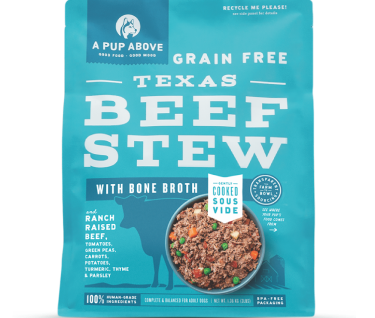
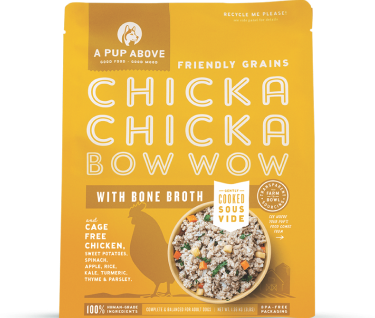
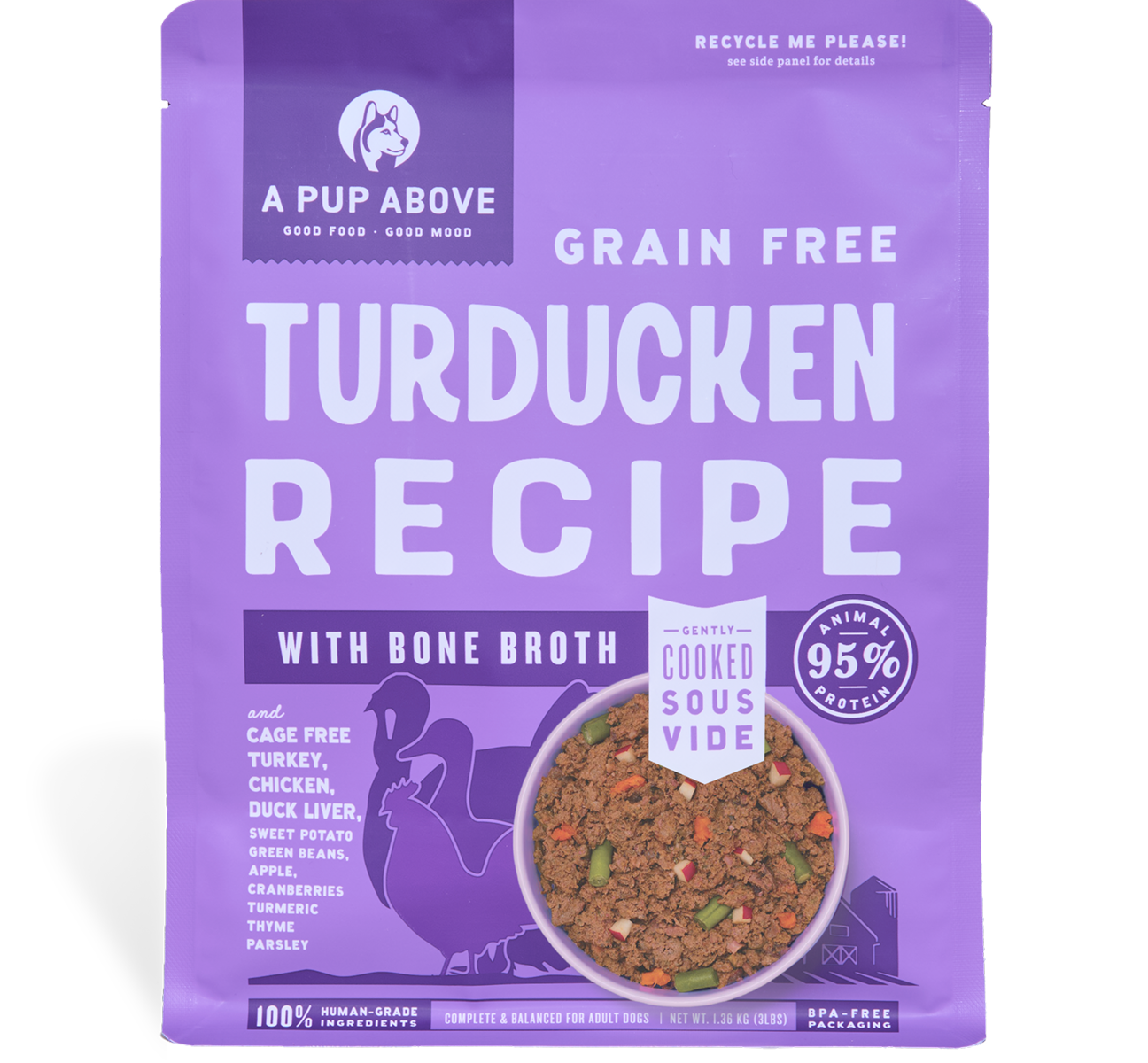
A Pup Above's recipes, including the dedicated Puppy Recipe, are Vet Nutritionist Formulated, and the product label and FAQ name AAFCO's all-life-stages standard, the highest of the three categories above. As with any commercial food, check the nutritional adequacy statement on the specific recipe you feed rather than assuming the same category holds across an entire lineup. That statement is a nutrient-adequacy floor, not the whole answer: how much to feed, how often, and what to watch for still change by stage and size, which is what the guides below cover.
Find Your Dog's Life Stage
| Situation | What changes most | Full guide |
|---|---|---|
| Puppy | Calorie density, meal frequency, growth-stage nutrients | Feeding a new puppy |
| Senior | Digestibility, dental comfort, calorie needs | Senior dog food and sensitive stomachs |
| Pregnant or nursing | Protein, fat, and calorie needs, by trimester and after whelping | Feeding a pregnant or nursing dog |
| Small breed (generally under 20 lb) | Calorie density per pound, portion accuracy | Feeding a small-breed dog |
| A specific breed, like a French Bulldog | Breed-typical sensitivities on top of the size and stage above | What to feed a French Bulldog |
How Do Calorie Needs Change From Puppy to Senior?
As a rough starting point, before adjusting for breed size and activity level:
| Life stage | Daily calories | Typical meal frequency | Source |
|---|---|---|---|
| Puppy | Roughly 2 to 3 times an adult dog's per-pound amount | 3 to 4 meals a day | VCA Animal Hospitals |
| Healthy adult | Roughly 22.5 to 30 calories per pound, depending on size and activity | 2 meals a day | Merck Veterinary Manual |
| Pregnant, late-stage | 30% to 60% above her usual adult amount, rising through the final 3 weeks | Smaller, more frequent meals | VCA Animal Hospitals |
| Nursing, peak lactation | 2 to 4 times her usual adult amount | Free-choice or several small meals | VCA Animal Hospitals |
| Senior | Roughly 20% to 25% below an adult at the same weight, as activity slows | 1 to 2 meals, sometimes smaller and more frequent | VCA Animal Hospitals |
These are starting points, not a substitute for weighing your dog and adjusting to body condition. Age alone isn't the deciding factor for the senior category, either: as the Cummings School of Veterinary Medicine at Tufts University notes, turning 7 or 10 doesn't automatically make a dog biologically old, and large breeds typically reach the senior range around 5 to 8 years while small breeds often don't get there until 10 or 11, per VCA Animal Hospitals. For exact grams and cups by recipe and weight band at adult maintenance, use the full feeding chart by weight; it's built for adult dogs and isn't the right tool for puppies, pregnant or nursing dogs, or most seniors, which is why each of those has its own guide linked above.
Does Size Change What My Dog Needs, Beyond Age?
Yes, independent of life stage. Small dogs have faster metabolisms relative to their size, which is why veterinary nutritionists estimate small dogs need roughly 40 calories per pound of body weight per day, compared to about 22.5 calories per pound for large dogs, according to PetMD (Jennifer Coates, DVM). That's nearly double, pound for pound, which means portioning a small dog off a large dog's percentage of body weight tends to leave them underfed even when the ounces look about right. Because a small dog also eats so little at each meal, in cups or grams rather than in pounds, small errors in measuring show up faster and matter more. The small-breed feeding guide covers exact portioning, kibble-size considerations, and how often to feed a small dog.
Does a Specific Breed Change the Answer Again?
Sometimes. Breed size is one variable; breed-typical health tendencies are another, and they stack. A French Bulldog, for example, combines a small-to-medium size (the American Kennel Club caps the breed standard at 28 pounds) with a well-documented tendency toward sensitive digestion, skin issues, and weight gain, all of which change what to prioritize in a food beyond the general size-based math above. The French Bulldog feeding guide walks through calorie ranges by adult weight and what to look for and avoid for that breed specifically; if your dog's breed has its own well-known feeding considerations, that page is the model for how to think through them.
What if My Dog Has a Health Condition Too?
Life stage and size are the starting point, not the full picture, when a dog also has a diagnosed sensitivity or ongoing digestive issue. Sensitive stomachs get more common with age. Older dogs' digestion works less efficiently, and dental disease, which affects a majority of dogs by age three per VCA Animal Hospitals, makes chewing and processing food harder on top of that. If your dog is a senior with a sensitive stomach, start with the senior and sensitive-stomach guide and the Sensitive Stomach collection rather than general adult guidance, and loop in your vet if symptoms are new or persistent, since a health condition can call for a different approach than life stage alone would suggest.
Where Does A Pup Above Fit at Each Stage?
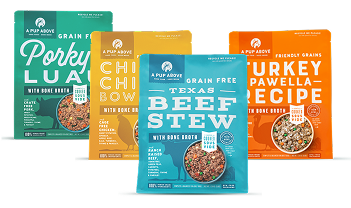
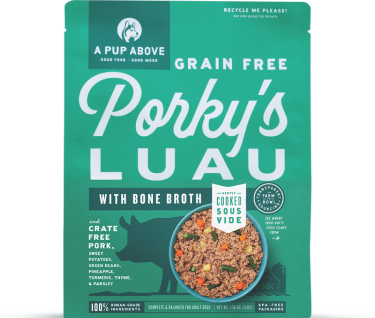
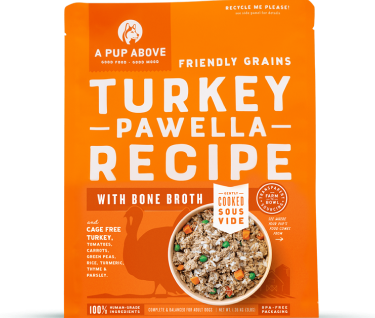
A Pup Above's gently cooked recipes, made with human-grade ingredients and real bone broth, are Vet Nutritionist Formulated. The product label names AAFCO's all-life-stages standard, the highest of the three AAFCO nutrient-adequacy categories, and each recipe carries its own nutritional adequacy statement on its packaging and product page; check the statement on the specific recipe you feed rather than assuming the same category holds across the whole lineup. That gentle-cooking process also supports nutrient absorption and easier digestion at every stage: A Pup Above fresh food is up to 50% more digestible than standard kibble (Gross et al., Small Animal Clinical Nutrition, 5th ed., Mark Morris Institute, 2020). In addition to the six protein recipes, A Pup Above publishes a dedicated Puppy Recipe sized and named for that stage. Browse the full lineup of Fresh Dog Food recipes, or start with the Sampler Pack if you want to see which recipe your dog prefers before committing to a full size; the Fresh Food collection has the complete catalog in one place. Meeting a nutrient-adequacy standard is the floor, not the finish line. Portion size, meal frequency, and what to watch for still change by stage and size, which is exactly what the five guides above are for.
FAQ
How many life stages does dog food actually have? Three, per AAFCO: growth (puppies, and pregnant or nursing dogs), adult maintenance, and all life stages, which is formulated to cover every stage at once. Check the nutritional adequacy statement on the label to see which one a given food meets.
Is it okay to feed an all-life-stages food to a puppy instead of a puppy-specific food? Yes. An "all life stages" formula is built to meet the higher growth-stage nutrient minimums, so it covers puppies as well as adults, per AAFCO's own standard. A dedicated puppy recipe can still be a useful, breed- or size-appropriate option within that same standard.
When does a dog become a "senior" for feeding purposes? There's no fixed age. Large and giant breeds are typically considered senior around 5 to 8 years old, and small breeds closer to 10 or 11, according to VCA Animal Hospitals, but slowing activity, weight change, or new digestive sensitivity are better signals than the calendar alone.
Do small dogs really need more food per pound than large dogs? Yes, roughly 40 calories per pound for small dogs versus about 22.5 calories per pound for large dogs, according to PetMD, because smaller dogs have faster metabolisms relative to their size. See the small-breed guide for exact portioning.
Should I switch foods gradually when moving between life stages? Yes. Even a same-brand change, like moving from a puppy recipe to an adult recipe, is a new nutrient balance for your dog's gut to adjust to. A gradual switch over roughly seven to ten days, or slower for a senior or sensitive-stomach dog, avoids most of the stomach upset a fast switch can cause; see how to feed A Pup Above for a full transition schedule.
Sources: Gross, K.L. et al., "Nutrient Requirements and Ingredient Considerations" in Small Animal Clinical Nutrition, 5th ed. (Mark Morris Institute, 2020) · Understanding Pet Food Labels (AAFCO) · Feeding Mature and Senior Dogs (VCA Animal Hospitals) · Raising Puppies (VCA Animal Hospitals) · Feeding the Pregnant Dog and Feeding the Nursing Dog (VCA Animal Hospitals) · Dental Disease in Dogs (VCA Animal Hospitals) · Daily Maintenance Energy Requirements for Dogs and Cats (Merck Veterinary Manual) · Nutrition Differences for Small, Toy, and Large Breed Dogs (Jennifer Coates, DVM, PetMD) · Official Standard of the French Bulldog (American Kennel Club) · When Should I Switch My Pet to a Senior Diet? (Cummings School of Veterinary Medicine at Tufts University) · A Pup Above product label and FAQ, /products/fresh-dog-food, verified live 2026-09-17