













Best Fresh Dog Food: How to Actually Choose

There's no single "best" fresh dog food, because the right one depends on your dog's stomach, your budget, and your freezer space. What you can control is the checklist: human-grade sourcing, a processing method that preserves nutrients, a real digestibility number, complete-and-balanced formulation, and a fit for your dog's specific needs. This guide walks through each criterion, shows where fresh food fits next to other formats, and points out where A Pup Above does and doesn't fit.
What Does "Fresh Dog Food" Actually Mean?
"Fresh" is a marketing word before it's a legal one. There's no AAFCO category called "fresh dog food." In practice, the term covers minimally processed food made with real, recognizable ingredients (not rendered meat meals or extruded pellets) and sold refrigerated or frozen rather than shelf-stable at room temperature. Most fresh brands cook their food using low, controlled heat, such as sous-vide or gentle simmering, instead of the high-heat extrusion used to make kibble or the high-pressure sterilization used to can wet food.
That distinction matters more than the word "fresh" itself. A food can be fresh and still be poorly formulated, and a shelf-stable or frozen food can still meet a high ingredient standard. The criteria below are what actually separate the two.
The Seven Things Worth Checking
1. Is it actually human-grade, not just "human-grade quality"? "Human-grade" is a defined term under AAFCO model regulations: every ingredient has to be edible for humans under federal food law, and the food has to be made in a facility licensed to produce human food. "Human-grade quality," "human-grade ingredients," and similar phrasing are not the same claim and usually mean the ingredients started out human-edible before being combined in a pet-food-only facility. Ask the brand directly which one applies; a straight answer is a good sign either way. (For the full definition, see what human-grade actually means.)
2. What's the processing method and temperature? Extrusion (kibble) runs hot and fast. Retort canning (wet food) runs hot and long, under pressure. Freeze-drying and dehydration remove moisture without much heat but concentrate the food. Gently cooked fresh food, including sous-vide, uses lower temperatures for longer, which is the basis for a lot of fresh brands' texture and smell claims. None of these methods is disqualifying on its own; the method just tells you what's likely to survive cooking; namely, texture, some heat-sensitive nutrients, and palatability.
3. Is there a real digestibility number, and who measured it? Look for a stated apparent digestibility percentage and where it came from: an internal feeding trial, a third-party lab, or a citation to published research. A Pup Above fresh food tests at 93%+ apparent digestibility in third-party studies, which is why A Pup Above fresh food is up to 50% more digestible than standard kibble; published kibble digestibility can run as low as 64%.1 A higher number is worth knowing, but ask for the specific figure and its source rather than accepting "highly digestible" as a claim on its own.
4. Is it complete and balanced, and how was that proven? A food can meet AAFCO nutrient profiles two ways: by formulation (the recipe's math checks out against a published nutrient chart) or by feeding trial (real dogs were fed it and monitored). Both are legitimate; feeding trials are the more rigorous of the two. The label should say which one applies. If it doesn't say either, that's worth asking about before you order.
5. What does it cost per day, and does that number include everything? Fresh food generally costs more per day than kibble and often more than canned, because it uses more meat and less filler and has a shorter shelf life to manage. Cost per day depends on your dog's weight, activity level, and the recipe or protein you choose, so a single headline price rarely tells the whole story. Compare full box price against actual daily portion size, not against a smaller competitor's serving size.
6. How does it handle a sensitive stomach or a picky eater? This is where ingredient lists matter less than real-world feeding data. A Pup Above's own review data shows this is the single most common thing customers write about: across 1,212 approved reviews, "picky eater" comes up in 281 of them (23%), by far the largest theme in the corpus, followed by digestion and stool quality at 59 combined mentions.2 If your dog has a sensitive stomach or has refused other foods, ask any brand you're considering for their transition-success data, not just their ingredient deck.
7. How is it shipped and stored, and does that fit your kitchen? Frozen fresh food needs freezer space and a thaw-ahead routine; it also tends to have the longest shelf life once frozen. Refrigerated fresh food needs fridge space and a shorter use-by window. Either way, ask what happens if a delivery is delayed, since that's a real logistics question, not a hypothetical one.
How Fresh Compares to Other Formats
Fresh, gently cooked food is one of several widely sold formats, alongside kibble, canned, freeze-dried, and raw. None is inherently better across every attribute; they trade off differently on processing method and heat, ingredient standard, moisture, shelf life, and storage, and the right choice depends on your priorities. The seven criteria above are how you evaluate a specific food inside whichever format you're considering, since a high-quality food in any category will be upfront about processing method, digestibility, and complete-and-balanced status, and a food that's vague on all three is worth a second look regardless of category.
Several other brands also sell human-grade or human-grade-adjacent fresh food delivered frozen or refrigerated by subscription. That's real competition worth knowing about, and the seven criteria above, not whichever brand has the best ad, are how you tell them apart.
Where A Pup Above Fits
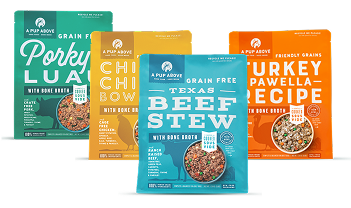
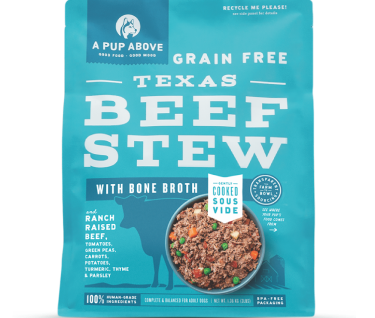
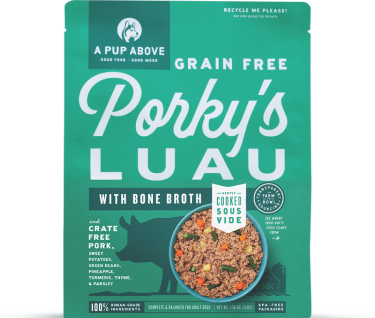
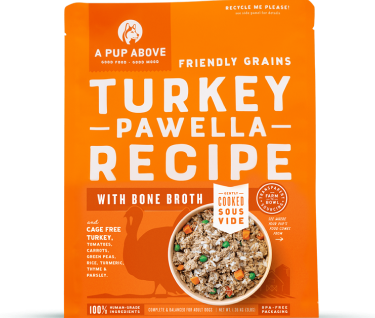
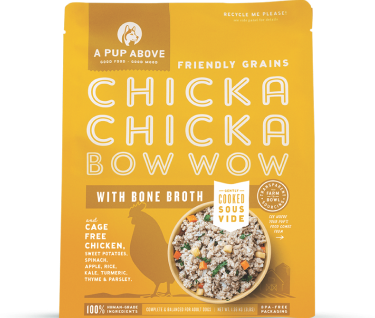
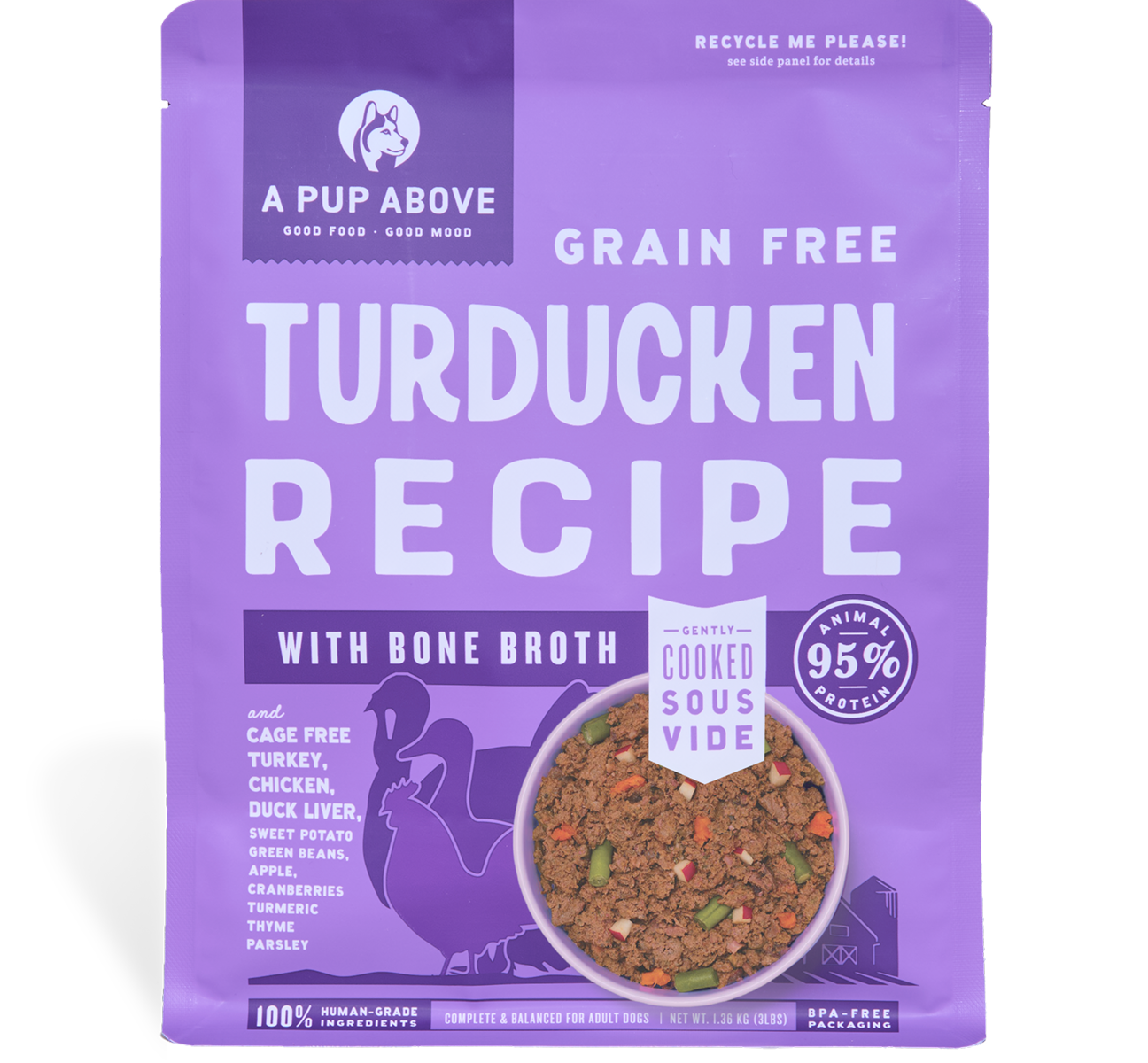
A Pup Above makes human-grade, sous-vide, gently cooked fresh dog food in seven recipes, including Chicka Chicka Bow Wow, Turkey Pawella, Texas Beef Stew, Turducken Recipe, Fish Gone Wild, Porky's Luau, and a Puppy Recipe, each finished with real bone broth and sold in 3lb and 7lb bags on the fresh dog food page. It fits the checklist above this way:
- Human-grade: every recipe is made from human-edible ingredients.
- Processing: cooked sous-vide, a lower-heat method also used in fine-dining kitchens to preserve texture and nutrients.
- Digestibility: 93%+ apparent digestibility in third-party studies.1
- Sensitive stomachs and picky eaters: the two most common reasons customers give for trying it, per the brand's review data above; the Sensitive Stomach collection is built around that specific need.
- Trying before committing: the sampler pack lets you test recipes before subscribing to a full rotation, and the Best Sellers bundle is the starting point for shoppers who don't want to pick a single recipe first.
- Format: frozen, shipped with dry ice, thawed in the fridge before serving. If you're deciding whether frozen storage works in your kitchen, that's the one real tradeoff to weigh against the digestibility and ingredient standard above.
To see the full standard behind these claims, read our food page or the deeper explanation of what gently cooked means.
Frequently Asked Questions
Is fresh dog food actually better than kibble? "Better" depends on what you're optimizing for. Fresh food generally uses less processing and a higher ingredient standard when the brand is human-grade, but it costs more per day, needs freezer or fridge space, and has a shorter shelf life. Kibble is shelf-stable, cheaper per day, and easier to store, but relies on high-heat extrusion and typically uses feed-grade ingredients. Neither format is automatically wrong for a healthy dog; the choice comes down to budget, storage, and your dog's individual digestion.
How do I verify a "human-grade" claim instead of taking a brand's word for it? Ask whether every ingredient is human-edible and whether the food is made in a facility licensed for human food production. Both have to be true for the claim to meet AAFCO's model definition. A brand that can answer both questions specifically is a good sign; one that only says "human-grade quality" is making a softer claim.
Does fresh dog food have to stay frozen? Most fresh, gently cooked dog food ships and stores frozen, then gets thawed in the refrigerator before serving, similar to how you'd handle fresh meat from a grocery store. Once thawed, it typically needs to be used within about a week, so check the specific brand's guidance rather than assuming.
Is fresh dog food worth the extra cost? That depends on your dog's needs and your budget; it's a big enough question that it deserves more than a one-line answer here. As a starting point, weigh the ingredient and digestibility differences against the higher daily cost and the storage commitment, and consider a topper amount or a smaller size before committing to a full switch.
What's the difference between fresh and raw dog food? Fresh, gently cooked food is cooked at low temperatures before serving; raw food is not cooked at all. Cooking reduces certain pathogen risks and can improve digestibility for some dogs, while raw diets rely on careful sourcing and handling to manage those same risks. Both are typically sold frozen.
How do I switch my dog to a new fresh food without stomach upset? Transition gradually over a week or more, mixing increasing amounts of the new food into the old one rather than swapping all at once. See how to switch your dog's food for a day-by-day schedule.
Sources
- Third-party digestibility testing puts A Pup Above fresh recipes at 93%+ apparent digestibility; published kibble digestibility can be as low as 64%. Gross, K.L., et al. Small Animal Clinical Nutrition, 5th ed. Mark Morris Institute, 2020. ↩
- A Pup Above Okendo review corpus, 1,212 approved reviews, pulled 2026-08-13 (internal aggregate). ↩